
Most Headaches Have a Cause in the Neck. Finding It Changes Everything.
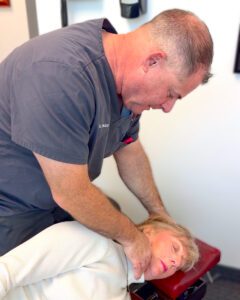
Headaches can disrupt every part of your life. They can make it difficult to work, concentrate, drive, spend time with your family, or even sleep. If you have been dealing with recurring headaches or migraines, you know that pain medication provides temporary relief at best. It does not address why the headaches keep coming back.
At Precision Spinal Care in Chesapeake, Virginia, Dr. David Packer takes a diagnostic approach to headaches that focuses on identifying the underlying cause, particularly when that cause is structural or mechanical in origin. Dr. Packer is fellowship-trained in spinal biomechanics and trauma through SUNY Buffalo Jacobs School of Medicine and is the only board-certified NUCCA chiropractor in the Hampton Roads area. He also serves on the Board of Directors of the Chesapeake Regional Healthcare Foundation.
The upper cervical spine (the junction of the head and neck) is one of the most common sources of chronic headache pain. Dr. Packer’s training in upper cervical biomechanics, combined with his fellowship rotations in neurosurgery, neuroradiology, pain management, and emergency medicine, allows him to evaluate headache patients from multiple clinical perspectives, determine whether the cause is mechanical, and refer directly to a neurologist or other specialist when the headache presentation suggests a condition that requires medical evaluation.
Why Do I Keep Getting Headaches?
Headaches are one of the most common complaints in medicine, but “headache” is a symptom, not a diagnosis. The pain you feel in your head can originate from many different structures, and the cause determines which treatment will actually work.

Most people who experience chronic or recurring headaches have tried medication, rest, hydration, and stress management. When these approaches provide only temporary relief, it is often because the underlying mechanical cause has not been identified.
Understanding the type of headache you have is the first step toward the right treatment.
Cervicogenic Headaches
Cervicogenic headaches originate from the cervical spine (neck) but produce pain that is felt in the head. Dysfunction in the joints, muscles, or ligaments of the upper neck can refer pain into the base of the skull, the temples, behind the eyes, and across the forehead. These headaches are often one-sided and may be accompanied by neck stiffness or reduced range of motion.
Cervicogenic headaches are among the most common types of chronic headaches, and they are frequently misdiagnosed as tension headaches or migraines because the pain is felt in the head rather than the neck. This is one of the most important reasons to have a thorough cervical spine evaluation as part of any headache exam.
Tension Headaches
Tension headaches are typically described as a constant, dull pressure on both sides of the head, often compared to a tight band around the forehead. They are commonly associated with stress, fatigue, poor posture, and muscle tension in the neck, shoulders, and upper back.
When tension headaches become frequent or chronic, there is often a mechanical component involving the cervical spine. Tight muscles in the neck and shoulders are frequently a response to an underlying spinal imbalance rather than the cause of the problem itself.
Migraines
Migraines are characterized by intense, throbbing pain often on one side of the head, frequently accompanied by nausea, sensitivity to light and sound, and visual disturbances (aura). Migraines can last from several hours to several days and can be severely disabling.
Research published in peer-reviewed literature has found that upper cervical misalignment can contribute to migraine frequency and severity. A pilot study published in BioMed Research International followed migraine patients who received NUCCA upper cervical care and observed improvements in headache symptoms. While the causes of migraines are complex and not fully understood, many migraine patients have a mechanical component in the upper cervical spine that, when addressed, can reduce the frequency and intensity of episodes.
Post-Traumatic Headaches
Headaches that begin after a motor vehicle accident, fall, sports injury, or other trauma can result from damage to the cervical spine, including ligament injuries, facet joint dysfunction, disc damage, and soft tissue injury. Post-traumatic headaches may appear immediately after the event or develop in the days and weeks that follow.
In some cases, headaches following trauma may be associated with concussion or traumatic brain injury (TBI). Dr. Packer performs neurological assessments on all trauma patients and refers to neurology when the clinical presentation suggests TBI or other conditions requiring medical evaluation. This screening is informed by his fellowship training, which included rotations in neurosurgery, neuroradiology, and emergency medicine.
Cluster Headaches
Cluster headaches produce severe, sharp pain typically around one eye or one side of the head, occurring in cyclical patterns. The exact cause of cluster headaches is not completely understood. While some patients with cluster headaches have reported improvement with upper cervical care, the evidence for a mechanical cause is less established than it is for cervicogenic headaches and migraines. Dr. Packer evaluates each patient individually and refers to neurology when cluster headache patterns are identified and the clinical picture warrants specialist evaluation.
The Connection Between Your Neck and Your Headaches
Many patients are surprised to learn that the source of their headache pain is actually in their neck. The upper cervical spine has a direct anatomical relationship with the structures that influence headache patterns.
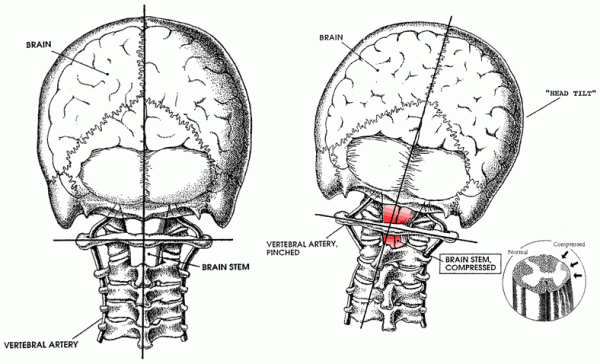
The atlas (C1) and axis (C2) vertebrae sit at the junction of the skull and the spinal column. This area houses the brainstem, and the nerves that exit the upper cervical spine directly innervate the head, face, and scalp. When the upper cervical spine is misaligned, several things can happen:
Nerve irritation. Misalignment can compress or irritate the nerves that exit the upper cervical region, producing pain signals that radiate into the head. The trigeminocervical nucleus, which processes pain signals from both the upper cervical nerves and the trigeminal nerve (the primary pain nerve of the head and face), is located in this region. This is why cervical dysfunction can produce pain that feels like it originates in the head.
Muscle tension. The muscles of the upper neck and suboccipital region respond to misalignment by tightening and contracting. This chronic muscle tension can produce headache symptoms directly and can also contribute to trigger points that refer pain into the temples, forehead, and behind the eyes.
Altered blood flow and cerebrospinal fluid dynamics. The upper cervical spine influences blood flow to and from the brain. Research has explored the relationship between upper cervical misalignment and intracranial compliance, suggesting that alignment issues in this region may affect fluid dynamics in ways that contribute to headache and migraine patterns.
This is why Dr. Packer’s evaluation of headache patients always includes a thorough assessment of the cervical spine, even when the pain is felt entirely in the head.
Related reading: How Chiropractic Can Help Headaches
Our Diagnostic Approach to Headaches
Dr. Packer begins every headache case with a thorough diagnostic process. He does not recommend treatment until the source of the problem has been identified. This structured approach ensures that care decisions are based on clinical findings, not assumptions.
Step 1: Comprehensive History
Dr. Packer takes the time to understand your headache pattern: when the headaches started, how often they occur, where the pain is located, what makes them better or worse, whether they are accompanied by other symptoms (nausea, visual changes, dizziness, numbness), any history of trauma, and what treatments you have tried. This clinical context guides the entire examination.
Step 2: Functional and Structural Examination
Dr. Packer performs an orthopedic, neurological, and biomechanical assessment to clinically correlate your symptoms with objective findings. This includes neurological screening, range of motion testing, evaluation of cervical spine mechanics, and assessment of muscle tension and trigger point patterns. The neurological component is particularly important for headache patients, as it helps identify signs that may indicate a condition requiring referral to neurology, such as TBI, vascular issues, or other non-mechanical causes.
Step 3: Imaging Based on Clinical Findings
When indicated by the history and examination, Dr. Packer orders the appropriate imaging. This typically begins with cervical X-rays taken in the office. Based on those findings and the clinical picture, additional imaging such as MRI may be ordered to confirm or rule out the suspected cause. For patients with post-traumatic headaches, additional studies may be warranted to evaluate for structural damage related to the injury.
This approach matters because different types of headaches require different treatments. A cervicogenic headache caused by upper cervical misalignment requires a different approach than a migraine driven by vascular factors. A post-traumatic headache with neurological symptoms requires a different diagnostic approach than chronic tension headaches related to postural dysfunction. An accurate diagnosis prevents you from cycling through treatments that don’t address the actual cause.
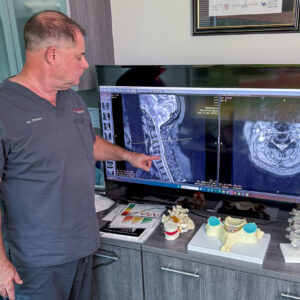
Dr. Packer holds post-graduate credentials in MRI spine interpretation, spinal biomechanical engineering, orthopedic testing, and spinal trauma through the University at Buffalo Jacobs School of Medicine. He is credentialed to read MRIs and make appropriate clinical decisions based on imaging findings.
When Your Headaches Require a Specialist
Not all headaches have a mechanical cause. If Dr. Packer’s examination reveals neurological findings that suggest TBI, vascular issues, or other conditions beyond the scope of chiropractic care, he refers directly to the appropriate specialist. His fellowship training included clinical rotations in neurosurgery, neuroradiology, pain management, and emergency medicine. This interdisciplinary background means he understands how neurologists and other specialists evaluate headache conditions, which allows him to match your specific presentation to the right type of provider rather than making a general referral.
The goal is to get you to the right type of care as quickly as possible, whether that care is provided in his office or with a medical colleague.
Related reading: How Precision Spinal Care Can Help with Your Pain
The NUCCA Approach to Headaches

NUCCA stands for the National Upper Cervical Chiropractic Association. It represents a highly specialized approach to chiropractic care that focuses on the relationship between the head and the upper cervical spine. Because so many chronic headaches originate from dysfunction in this exact region, NUCCA is particularly well-suited for headache patients.
Dr. Packer holds full board certification in NUCCA, a distinction achieved by a small number of NUCCA doctors worldwide.
How NUCCA Differs from Traditional Chiropractic
Unlike traditional chiropractic adjustments that involve twisting, rotating, or sudden movements of the spine, NUCCA corrections are gentle. There is no cracking or popping. The correction involves light, sustained pressure applied to the upper cervical area, calculated from each patient’s individual X-ray analysis.
This is especially relevant for headache patients. Many people with chronic headaches are sensitive to sudden movements of the head and neck, and the thought of traditional cervical manipulation can be a barrier to seeking care. NUCCA offers a gentle approach that does not involve rotational force applied to the neck.
How NUCCA Addresses Headaches
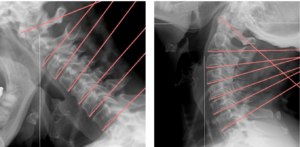
NUCCA corrections are calculated mathematically from a series of precision X-rays that reveal the specific misalignment pattern of your upper cervical spine. There are over 10,000 different combinations of how the head and neck can misalign, and your correction is calculated specifically for your anatomy.
By restoring proper alignment between the head and the upper cervical spine, NUCCA care addresses the mechanical dysfunction that can irritate nerves, create muscle tension, and alter fluid dynamics in the upper cervical region. For patients whose headaches have a cervicogenic or mechanical component, correcting this misalignment addresses the underlying cause rather than repeatedly treating symptoms.
This is not the right approach for every headache patient. Some headaches have causes that are not mechanical in nature and require medical management. Dr. Packer’s diagnostic process determines which patients are appropriate candidates for NUCCA care and which patients need a different path.
Related reading: How Does NUCCA or Light Force Chiropractic Work?
Headaches After a Car Accident
If your headaches began after a motor vehicle collision or other injury, the evaluation process is especially important. The cervical spine is highly vulnerable to injury during an accident, and damage to the upper cervical region can trigger headaches that persist long after the initial trauma.
Why Your Headaches May Have Been Missed
Emergency rooms are equipped to rule out fractures, intracranial bleeding, and life-threatening conditions. However, they are generally not designed to detect mechanical cervical injuries such as upper cervical misalignment, ligament instability, or facet joint damage that can produce chronic headaches. A patient can leave the ER with negative imaging and still have structural damage to the cervical spine that is driving ongoing headache symptoms.
If you have been experiencing headaches since your accident and have been told that imaging is normal, a more thorough biomechanical evaluation of the cervical spine may identify the source of your pain.
Related reading: Can I Be Hurt in a Car Accident if There Is Not Much Damage to My Car?
Neurological Screening for Post-Traumatic Headaches
Post-traumatic headaches can be caused by mechanical cervical injury, but they can also be a symptom of concussion or TBI. Dr. Packer performs a neurological assessment on every trauma patient to screen for signs that may indicate a condition requiring referral to neurology. This screening is a standard part of the evaluation for any patient whose headaches followed a traumatic event.
Advanced Diagnostics for Auto Injury Patients
For patients injured in motor vehicle accidents, Dr. Packer utilizes additional diagnostic tools beyond the standard evaluation. These include DynaROM with surface EMG for computerized range of motion analysis, flexion-extension X-ray studies assessed under AMA Guides (5th Edition) criteria for Alteration of Motion Segment Integrity (AOMSI), and specific thin-slice MRI protocols designed to provide detailed imaging of the affected cervical regions. These tests produce objective, measurable data that documents the nature and extent of injury.
Documentation and Working with Your Attorney
If your headaches are related to an auto accident or other injury case, Dr. Packer understands the importance of thorough documentation and appropriate care coordination.
Dr. Packer holds credentials in crash dynamics, accident reconstruction, and medical-legal documentation. He has served as an expert witness for auto injury patients in court and understands what is required to properly document and support your case.
Every aspect of Dr. Packer’s evaluation and treatment for personal injury patients is documented using objective, measurable findings. Computerized range of motion testing, standardized examination protocols, and imaging analysis provide data that can be independently reviewed and verified. This structured approach to documentation ensures that clinical findings are clearly supported by the testing on which they are based.
We work with most insurance plans and offer medical lien options for personal injury cases, which means you may be able to receive treatment without upfront out-of-pocket costs while your case is pending. Dr. Packer communicates regularly with attorneys and case managers to ensure your care is coordinated and well-documented throughout your course of treatment.
Related reading: What Is a Personal Injury Lien and Can I Use It to Pay for My Automobile Injury Related Healthcare?
Comprehensive Care Under One Roof
Headache treatment often requires addressing the problem from multiple angles. At Precision Spinal Care, Dr. Packer and his team offer several services that work together.
Treatment Services
NUCCA Chiropractic Care – Gentle, precision-based corrections to restore proper alignment of the upper cervical spine and address the mechanical dysfunction that can drive chronic headaches.
Rehabilitation Therapy – Targeted rehabilitation to strengthen the cervical musculature, improve posture, and provide long-term stabilization after the underlying mechanical issue has been addressed.
Massage Therapy – Our licensed massage therapists work with tight, painful muscles in the neck, shoulders, and upper back to complement your spinal care, reduce trigger points, and improve soft tissue recovery.
Advanced Diagnostics – In-house cervical X-rays, computerized range of motion testing with surface EMG, and the ability to order MRI and CT scans when indicated. For auto injury cases, additional studies including flexion-extension X-rays for ligament instability and thin-slice MRI protocols are available.
Referral Network
When your condition requires care beyond what Dr. Packer provides, he refers directly to trusted neurologists, neurosurgeons, pain management physicians, and other specialists in the Hampton Roads area. Because of his fellowship training alongside these types of providers, Dr. Packer understands how each specialist evaluates and approaches headache conditions. This allows him to match you to the most appropriate provider for your specific diagnosis, rather than making a general referral.
Related reading: How Do I Choose the Best Doctor for My Neck or Back Pain?
Frequently Asked Questions About Headaches
Schedule Your Evaluation
Whether your headaches have been present for years, started after an accident, or have recently become more frequent, an accurate diagnosis is the first step toward finding relief.
Schedule an exam with Dr. Packer at Precision Spinal Care today. He’ll take the time to listen to your concerns, perform a thorough evaluation, and explain what he finds in terms you can understand.