
Back Pain Has Many Causes. Treatment Should Start with the Right Diagnosis.
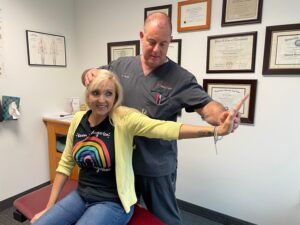
Back pain can take over your daily life. It can affect your ability to work, exercise, sleep, and spend time with family. If you have been dealing with persistent or recurring back pain, you know that short-term fixes only go so far.
Here at Precision Spinal Care in Chesapeake, Virginia, Dr. David Packer focuses on identifying the underlying cause of your back pain rather than simply managing symptoms. Dr. Packer is fellowship-trained in spinal biomechanics and trauma through SUNY Buffalo Jacobs School of Medicine and is the only board-certified NUCCA chiropractor in the Hampton Roads area. He also serves on the Board of Directors of the Chesapeake Regional Healthcare Foundation, reflecting his commitment to strengthening healthcare access in the community he has served since 2002.
Dr. Packer’s approach combines advanced diagnostic training with gentle, precision-based treatment to address back pain at its source. Through his fellowship, he completed interdisciplinary training and clinical rotations alongside orthopedic surgeons, neurosurgeons, pain management physicians, neuroradiologists, and emergency medicine providers. This cross-disciplinary background allows him to evaluate your condition from multiple clinical perspectives, determine the most appropriate course of care, and refer directly to the right type of medical specialist when your condition requires it.
Why Does My Back Hurt?
The lumbar spine (lower back) bears the majority of your body’s weight and absorbs significant mechanical stress during everyday movement. This makes it one of the most common areas of the spine to develop pain. But “back pain” is not a diagnosis. It is a symptom, and it can originate from many different structures.

While the lower back is the most common source of back pain, the thoracic spine (mid-back) can also develop problems. Thoracic pain is less common but can result from postural dysfunction, disc problems, rib-joint irritation, or trauma. The same diagnostic principles apply: identifying the cause of your pain is essential before pursuing treatment.
Understanding which category your condition falls into is essential for choosing the right treatment.
Structural and Anatomical Causes
These include disc herniations, disc bulges, nerve root compression, spinal cord or cauda equina compression, stenosis, fractures, bone spurs (osteophytes), infection, and pathology. These are structural problems typically identified through MRI, CT, or static X-ray imaging. Structural causes can produce symptoms beyond the back itself, including radiating pain into the buttock, hip, and leg or numbness and tingling in the lower extremities.
Biomechanical Causes
Biomechanical (mechanical) problems involve how the joints of the spine move and function. Ligament injuries, soft tissue damage, facet joint dysfunction, altered joint motion, and muscular strain fall into this category. Biomechanical problems tend to produce facet-mediated or discogenic referred pain rather than true radicular symptoms. These causes are identified through functional examination, range of motion testing, and specialized X-ray analysis. Research published in peer-reviewed literature has consistently identified mechanical dysfunction as a common contributor to chronic low back pain.
Trauma-Related Causes
Motor vehicle accidents, falls, workplace injuries, and sports injuries can damage multiple structures in the lumbar spine simultaneously. These injuries often involve a combination of disc, ligament, joint, and soft tissue damage that may not be fully apparent on initial emergency room evaluation. Symptoms from trauma-related injuries sometimes develop or worsen in the days and weeks following the event.
Postural, Occupational, and Repetitive Stress
Jobs that require prolonged sitting, repetitive lifting, bending, or twisting can gradually produce back pain and dysfunction over time. Poor posture, sedentary work environments, and improper lifting mechanics are common contributing factors that often worsen without intervention.
The distinction between anatomical and biomechanical causes matters because they often require different types of care. An accurate diagnosis is the foundation of effective treatment. Treating the wrong structure will not resolve your symptoms.
Related reading: What Is the Real Cause of My Pain: Primary Versus Compensatory Pain?
Common Conditions That Cause Back Pain
Disc Problems
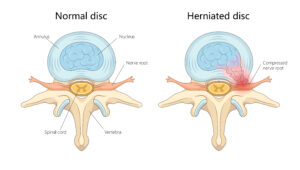
The intervertebral discs act as spacers and shock absorbers between your vertebrae. When a disc bulges or herniates, it can press on nearby nerve roots and produce pain that radiates into the buttock, hip, or leg (commonly called sciatica). Disc injuries can result from trauma, repetitive stress, or degenerative changes.
Related reading: How to Treat Bulging and Herniated Discs
Facet Joint Dysfunction
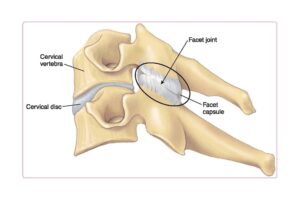
The facet joints are the small paired joints at the back of each vertebra that guide spinal motion. When these joints become irritated, inflamed, or damaged, they can produce localized back pain and stiffness that worsens with certain movements, particularly extension and rotation.
Ligament Injury and Instability
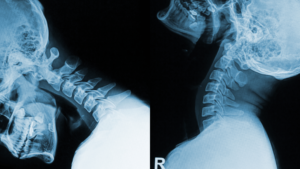
The ligaments of the spine hold the vertebrae in proper alignment. When these ligaments are damaged, whether from a car accident, a fall, or repetitive strain, the affected spinal segment can become unstable. Ligament injuries do not appear on standard MRI and often require functional testing such as flexion-extension X-ray analysis to detect.
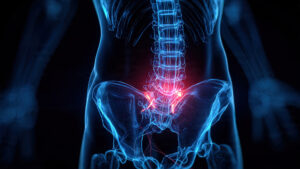
Sacroiliac (SI) Joint Dysfunction
The SI joints connect the base of the spine to the pelvis. Dysfunction in these joints can produce pain in the lower back, hip, and buttock that is sometimes mistaken for lumbar spine problems or sciatica.
Compensatory Pain from Upper Cervical Misalignment
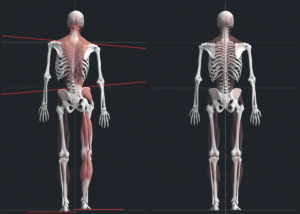
The spine functions as an integrated system. A misalignment in the upper cervical region (the junction of the head and neck) can alter posture, weight distribution, and muscle balance throughout the entire spinal column. Over time, this can create abnormal mechanical stress on the lower back, including pelvic tilt, paraspinal muscle spasm, and SI joint dysfunction. This is one reason Dr. Packer includes a cervical evaluation as part of a thorough spinal assessment, even when your primary complaint is low back pain.
Related reading: How an Upper Cervical Adjustment Helps Low Back Pain
Muscle Strain and Soft Tissue Injury
Acute muscle strains from lifting, twisting, or sudden movement are among the most common sources of back pain. While many muscle strains resolve with time, recurring episodes may indicate an underlying mechanical problem that has not been addressed.
Our Diagnostic Approach to Back Pain
Dr. Packer begins every case with a thorough diagnostic process. He does not recommend treatment until the source of your pain has been identified. This structured approach ensures that care decisions are based on clinical findings, not assumptions.
Step 1: Comprehensive History
Dr. Packer takes the time to understand your pain: when it started, what makes it better or worse, whether it radiates, any prior injuries or treatment, and how it affects your daily function. This clinical context guides the entire examination.
Step 2: Functional and Structural Examination
Dr. Packer performs an orthopedic, neurological, and biomechanical assessment to clinically correlate your symptoms with objective findings. This includes range of motion testing, neurological screening, and evaluation of spinal mechanics. This exam helps determine whether your pain is anatomical, mechanical, or both.
Step 3: Imaging Based on Clinical Findings
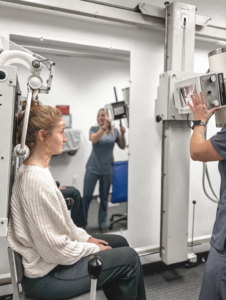
When indicated by the history and examination, Dr. Packer orders the appropriate imaging. This typically begins with X-rays taken in our office. Based on those findings and the clinical picture, additional imaging such as MRI or further X-ray studies of the lumbar spine may be ordered to confirm or rule out the suspected cause of your pain. Imaging is not used as a first step or a screening tool. The clinical exam determines what imaging, if any, is appropriate.
This approach matters because the cause of your back pain determines the appropriate treatment. Disc problems require a different approach than facet joint dysfunction. Ligament instability requires different management than muscle strain. An accurate diagnosis prevents you from spending time and money on the wrong treatment.
Dr. Packer holds post-graduate credentials in MRI spine interpretation, spinal biomechanical engineering, orthopedic testing, and spinal trauma through the University at Buffalo Jacobs School of Medicine. He is credentialed to read MRIs and make appropriate clinical decisions based on imaging findings.
When Your Condition Requires a Specialist
Not all back pain is best managed with chiropractic care. If Dr. Packer’s examination and imaging reveal a condition that requires interventional or surgical treatment, he refers directly to the appropriate specialist. His fellowship training included clinical rotations in orthopedic spine surgery, neurosurgery, pain management, neuroradiology, and emergency medicine. This interdisciplinary background means he understands how different specialists evaluate and treat spinal conditions, which allows him to match your specific diagnosis to the right type of provider rather than making a general referral.
Dr. Packer’s referral network includes orthopedic surgeons, neurosurgeons, neurologists, and pain management physicians in the Hampton Roads area. He also coordinates with your primary care provider and any other treating physicians to maintain clear communication across your care team.
The goal is to get you to the right type of care as quickly as possible, whether that care is provided in his office or elsewhere.
Related reading: How Precision Spinal Care Can Help with Your Pain
The NUCCA Approach to Back Pain
NUCCA stands for the National Upper Cervical Chiropractic Association. It represents a highly specialized approach to chiropractic care that focuses on the relationship between the head and the upper cervical spine and its influence on the rest of the spinal column. Dr. Packer is one of fewer than 10% of NUCCA doctors worldwide who hold full board certification in this technique.
How NUCCA Differs from Traditional Chiropractic
Unlike traditional chiropractic adjustments that involve twisting, rotating, or sudden movements of the spine, NUCCA corrections are gentle. There is no cracking or popping. The correction involves light, sustained pressure applied to the upper cervical area, calculated from each patient’s individual X-ray analysis.
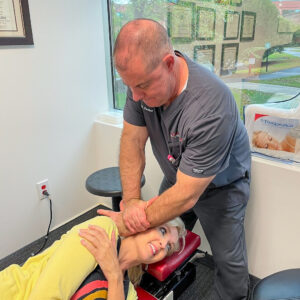
For patients who have had negative experiences with traditional chiropractic care, or who are nervous about spinal manipulation, NUCCA offers a gentle alternative that achieves results without force.
Why an Upper Cervical Correction Affects the Lower Back
If your primary complaint is low back pain, you may wonder why a correction to the upper cervical spine would help. The answer lies in how the spine functions as an integrated system.
When the head and upper neck are misaligned, the rest of the spine compensates to maintain balance. This compensation can create abnormal loading on the lumbar vertebrae, pelvic tilt, paraspinal muscle contracture, and SI joint dysfunction. Correcting the upper cervical misalignment allows the rest of the spine to return to a more balanced, mechanically sound position, which can reduce or resolve compensatory low back pain.
This is not the right approach for every patient. Some back pain has a local anatomical cause that requires direct treatment or specialist referral. Dr. Packer’s diagnostic process determines which patients are appropriate candidates for NUCCA care and which patients need a different path.
Related reading: How Does NUCCA or Light Force Chiropractic Work?
Back Pain After a Car Accident
If your back pain began after a motor vehicle collision, the evaluation process is especially important. Accident-related spinal injuries often involve multiple structures, and some injuries may not produce immediate symptoms.

Why Standard Testing May Miss Your Injury
Emergency rooms are equipped to rule out fractures and life-threatening conditions, but they are generally not designed to detect mechanical spinal injuries such as ligament instability, facet joint damage, or subtle disc injuries. Negative X-rays and standard imaging do not always exclude significant spinal injury. These problems can worsen over time if they are not identified and addressed early.
If you’ve been told “nothing is wrong” despite ongoing symptoms after an accident, a more thorough biomechanical evaluation may identify the source of your pain.
Related reading: Can I Be Hurt in a Car Accident if There Is Not Much Damage to My Car?
Advanced Diagnostics for Auto Injury Patients
For patients injured in motor vehicle accidents, Dr. Packer utilizes additional diagnostic tools beyond the standard evaluation. These include DynaROM with surface EMG for computerized range of motion analysis, flexion-extension X-ray studies assessed under AMA Guides (5th Edition) criteria for Alteration of Motion Segment Integrity (AOMSI), and specific thin-slice MRI protocols designed to provide detailed imaging of the affected spinal regions. These tests produce objective, measurable data that documents the nature and extent of injury.
Comprehensive Care Under One Roof
Back pain often requires more than one type of treatment. At Precision Spinal Care, Dr. Packer and his team offer multiple services to address your condition from several angles.
Treatment Services
NUCCA Chiropractic Care – Gentle, precision-based corrections to restore proper spinal alignment and reduce compensatory stress on the lumbar spine.
Rehabilitation Therapy – Targeted rehabilitation to strengthen supporting muscles, improve mobility, and provide long-term stabilization after the underlying mechanical issue has been addressed.
Massage Therapy – Our licensed massage therapists work with tight, painful muscles to complement your spinal care and improve soft tissue recovery.
Shockwave Therapy (StemWave) – StemWave delivers electrohydraulic acoustic waves to injured or inflamed tissue to stimulate the body’s natural healing response. Dr. Packer uses StemWave therapy on the lower back for patients dealing with chronic lumbar pain, soft tissue inflammation, and joint irritation. For many back pain patients, StemWave serves as an effective complement to spinal correction and rehabilitation therapy, addressing localized tissue damage that contributes to ongoing pain.
Advanced Diagnostics – In-house X-rays, computerized range of motion testing with surface EMG, and the ability to order MRI and CT scans when indicated. For auto injury cases, additional studies including flexion-extension X-rays for ligament instability and thin-slice MRI protocols are available.
Referral Network
When your condition requires care beyond what Dr. Packer provides, he refers directly to trusted neurologists, orthopedic surgeons, neurosurgeons, pain management physicians, and other specialists in the Hampton Roads area. Because of his fellowship training alongside these types of providers, Dr. Packer understands how each specialist evaluates and approaches spinal conditions. This allows him to match you to the most appropriate provider for your specific diagnosis, rather than making a general referral.
Related reading: Treatment Options for Chronic Spine Related Pain
For Personal Injury Patients
If your back pain is related to an auto accident or other injury case, Dr. Packer understands the importance of thorough documentation and appropriate care coordination.

Dr. Packer holds credentials in crash dynamics, accident reconstruction, and medical-legal documentation. He has served as an expert witness for auto injury patients in court and understands what is required to properly document and support your case.
Every aspect of Dr. Packer’s evaluation and treatment for personal injury patients is documented using objective, measurable findings. Computerized range of motion testing, standardized examination protocols, and imaging analysis provide data that can be independently reviewed and verified. This structured approach to documentation ensures that clinical findings are clearly supported by the testing on which they are based.
We work with most insurance plans and offer medical lien options for personal injury cases, which means you may be able to receive treatment without upfront out-of-pocket costs while your case is pending. Dr. Packer communicates regularly with attorneys and case managers to ensure your care is coordinated and well-documented throughout your course of treatment.
Related reading: What Is a Personal Injury Lien and Can I Use It to Pay for My Automobile Injury Related Healthcare?
Frequently Asked Questions About Back Pain
Schedule Your Evaluation
Whether your back pain developed after an accident, has been building over months or years, or keeps coming back despite previous treatment, an accurate diagnosis is the first step toward finding relief.
Schedule an exam with Dr. Packer at Precision Spinal Care today. He’ll take the time to listen to your concerns, perform a thorough evaluation, and explain what he finds in terms you can understand.